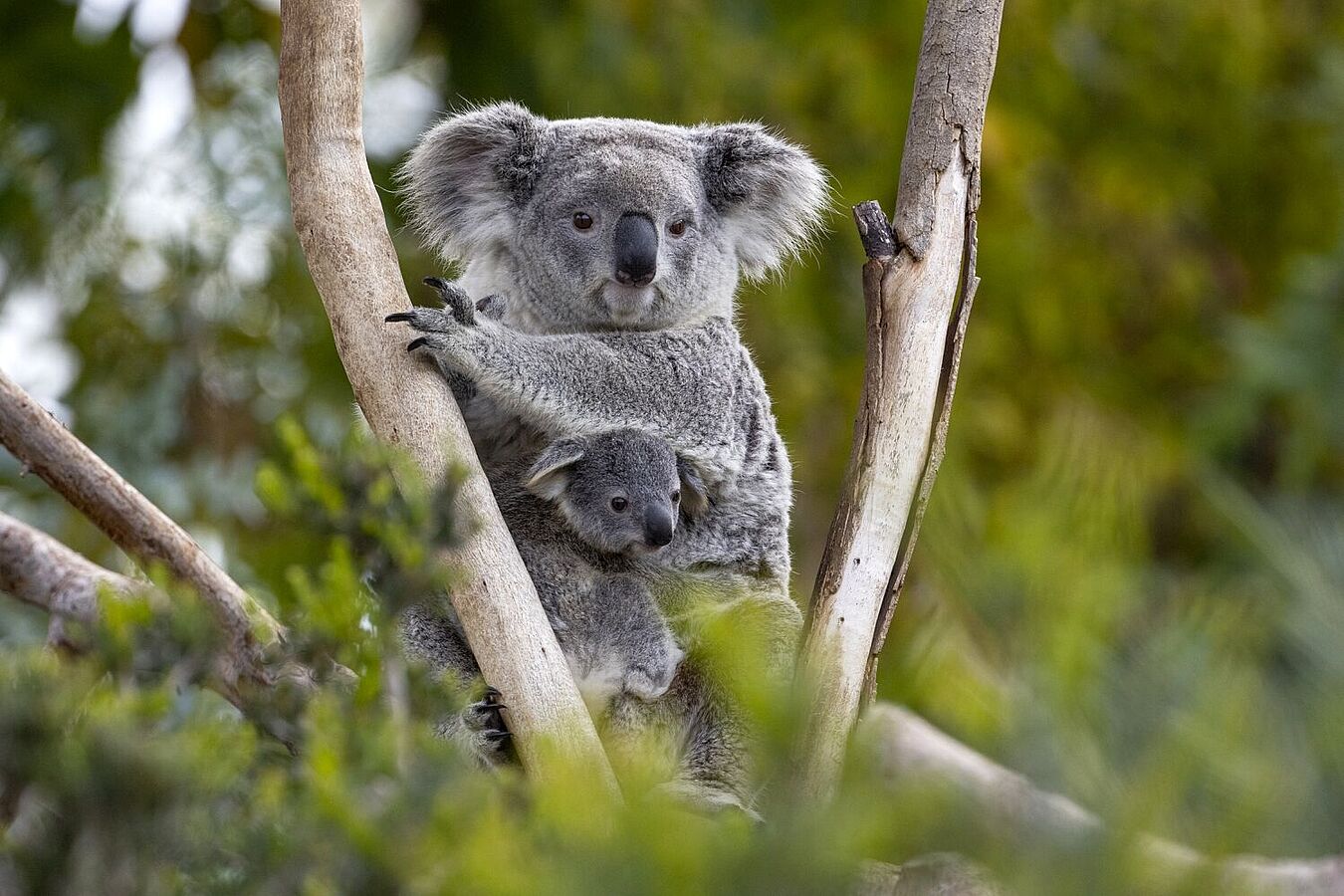
Retroviruses integrate into the host genome when they infect cells. If this happens in the germline, the integrated viruses can be passed on from generation to generation by inheritance rather than relying on infection. This is a common process and all living organisms, including humans, have in the past incorporated retroviruses as part of their own genome. For example, the remains of retroviruses make up eight percent of the human genome. In Koalas, however, this is not an ancient process, but one that is currently unfolding – with severe health effects on Koalas living today. Koalas (Phascolarctos cinereus) are at the earliest stages of genome colonization by the Koala Retrovirus (KoRV) and suffer high cancer prevalence as a result.
The Leibniz Institute for Zoo and Wildlife Research (Leibniz-IZW) in collaboration with the San Diego Zoo and Wildlife Alliance (SDZWA), zoos across Europe, the University of Nottingham and the biotechnology company Illumina have examined the genome, the life history, and the health of 111 koalas from SDZWA and European zoos representing 55 “triads” of father, mother and offspring from multiple generations to understand what happens to the koala retrovirus (KoRV) and the retrovirus “phaCin-β”, and the koala individuals over generations.
The Koala retrovirus has not been “tamed” and exhibits spread of new integrations
Bioinformatician Dr Guilherme Neumann from the Leibniz-IZW Department of Wildlife Diseases and